masala&maple.demo
 RestaurantLive
Build a professional d2c ecommerce website designed to turn Google visitors into enquiries.
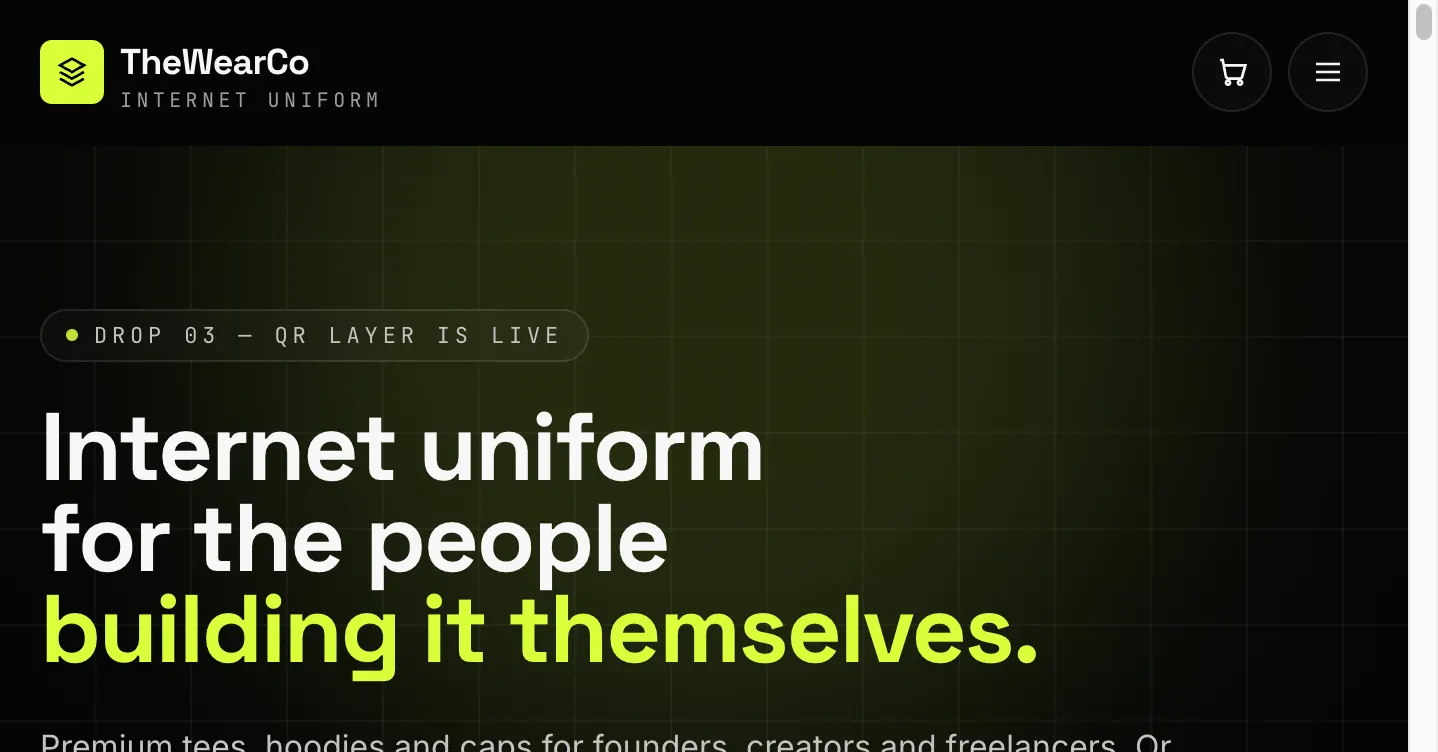
A D2C ecommerce marketing + storefront concept: themed drops, product storytelling, and a Design Studio where guests upload artwork or type a line, preview on a mockup, and order print-on-demand — no SKU sprawl.
Live preview coming soon
Brief us and we'll send the staging URL when this template is live.
What you'll see on the live site
Drop-based merchandising plus a Design Studio that turns browsers into orders.
4
6
3
21 days
Every section is shipped in the first build — no “phase two” promises, no upsell line at the bottom of the proposal.
Limited drops and internet-uniform positioning above the fold.
Upload or type artwork, preview on a mockup, order without SKU sprawl.
Apparel categories with clear CTAs into shop or customise.
QR and early-drop framing for retention.
Every d2c ecommerce template ships in 21 days from kickoff. You get a clickable Figma in week 1, a working preview URL in week 2, and a live, indexed site in week 3 — with daily updates in between.
Week 1
Week 2
Week 3
Each one is wired in by default — no plugin spaghetti, no third-party SaaS line on your monthly bill.
Three concrete buyer profiles where this template lands hardest in the discovery call.
Shopify themes get you live fast — they rarely feel like your brand. A D2C site like TheWearCo is built around drop storytelling and a conversion path you own, then layered with SEO and ads when you are ready to scale.
FAQ
No. It’s a Socialtrafic-built demo / upcoming-launch concept. Your brand gets a custom storefront with your catalogue, payments and drop calendar.
Both are options. We pick the stack from catalogue complexity, checkout needs and SEO goals after the audit.
Yes when scoped — POD APIs, Shopify apps or custom fulfilment. The demo shows the UX pattern; integrations are engagement-specific.
It creates the on-page foundations — clean collections, product pages, speed and schema when scoped — that SEO and Shopping campaigns need.
View the live demo, then request this template via the form — or get a free growth audit for your current store.
Each of these SEO pages embeds the live template block so prospects in that vertical see the proof up front.
Ecommerce development · India
We build ecommerce websites for Indian D2C and multi-brand sellers — Shopify or custom Next.js — with product IA, checkout, analytics and growth hooks (SEO + ads) when you are ready. See our D2C template demo, then get a custom storefront proposal.
Open landing pageCustom D2C storefronts are scoped after a free audit — catalogue size and checkout stack drive timeline more than the marketing shell.
Custom D2C storefronts are scoped after a free audit — catalogue size and checkout stack drive timeline more than the marketing shell.